Why Do Parking Lots Need Regular Pressure Washing in Dallas, TX?
A commercial parking lot is one of the first things customers, tenants, employees, and visitors see when they arrive at a property. In Dallas, parking lots can quickly collect oil stains, automotive fluids, dirt, tire marks, food spills, gum, and other grime. Add North Texas heat, traffic, dust, and periods of heavy rain, and those contaminants can become increasingly difficult to remove. Regular parking lot pressure washing in Dallas, TX helps businesses maintain a cleaner, more professional property while addressing buildup before it becomes a larger maintenance concern.
At 214 Pressure Washing, we understand that commercial exterior cleaning is about more than making pavement look better. The right cleaning process should address stubborn contaminants while protecting the surrounding property and managing wash water responsibly. Our team focuses on dependable service, careful cleaning methods, and solutions suited to the needs of Dallas-area commercial properties. Whether you manage a retail center, restaurant, office building, apartment community, or another high-traffic facility, routine parking lot cleaning can support the appearance, cleanliness, and long-term care of your property.
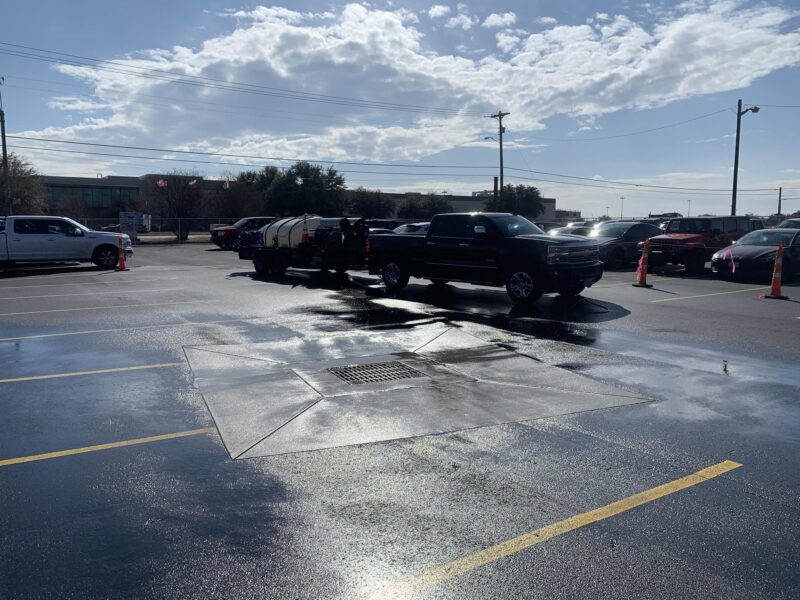
How Professional Parking Lot Cleaning Helps Dallas Businesses
Professional parking lot pressure washing removes accumulated contaminants that ordinary sweeping and rainfall cannot effectively address. Oil and grease are particularly important concerns. The EPA identifies oil and grease among pollutants commonly found in urban stormwater runoff, especially around paved, impervious surfaces.
Regular cleaning gives property managers a proactive way to manage these contaminants instead of waiting until stains and grime have built up across large sections of pavement.
Oil Stains Become Harder to Ignore Over Time
Parking lots naturally experience vehicle leaks and spills. Engine oil, transmission fluid, grease, and other automotive residues can leave dark stains that stand out against concrete and other paved surfaces. On a busy Dallas property, even small leaks can eventually create a patchwork of stains throughout parking spaces and traffic lanes.
Oil stains are not simply an appearance issue. Rainwater moving across paved areas can pick up oil, grease, sediment, and other contaminants and carry them toward drainage systems. The EPA specifically advises against washing spilled oil and grease into streets or storm drains because runoff can transport those pollutants into waterways.
Routine commercial pressure washing allows businesses to address staining before months or years of buildup make the property look neglected. Fresh spills should also be handled promptly using appropriate containment or dry cleanup practices rather than simply being sprayed toward a drain.
Dirt, Gum, Grime, and Traffic Residue Affect Curb Appeal
Think about how many vehicles and people may cross a busy Dallas parking lot each day. Tires bring in road grime, customers drop drinks or food, landscaping leaves behind organic debris, and heavily traveled areas develop visible traffic patterns.
A parking lot may technically still function, but its appearance can influence how visitors perceive the business connected to it. A clean exterior suggests that the property is being actively maintained. This is especially valuable for shopping centers, restaurants, hotels, medical offices, apartment communities, and professional buildings where first impressions matter.
Pressure washing reaches beyond what routine sweeping can accomplish. Sweeping removes loose debris, while professional washing targets dirt, stains, gum, and residue bonded to the pavement. Combining regular sweeping with scheduled deep cleaning helps maintain a more consistently presentable property.
Cleaner Pavement Supports a Safer, Better-Maintained Property
Safety is another reason not to let parking lot contamination accumulate. Grease, food residue, algae, and other buildup can create slick or unpleasant walking areas, particularly around entrances, dumpsters, loading areas, curbs, and frequently traveled pedestrian routes.
Pressure washing cannot eliminate every parking lot hazard, and damaged pavement, potholes, poor lighting, or drainage problems require their own solutions. However, removing surface grime and slippery organic buildup is an important part of a broader property maintenance program.
Regular cleaning also makes it easier for property managers to see the actual condition of paved surfaces. Once heavy dirt and staining are removed, cracks, damaged concrete, faded markings, or drainage concerns may be easier to spot and address.
Dallas Weather Makes Routine Parking Lot Maintenance Important
North Texas conditions can be tough on commercial exteriors. Long stretches of hot, dry weather can allow dust, vehicle residue, and stains to accumulate on pavement. When storms arrive, water moves across these impervious surfaces and can carry accumulated pollutants with it.
The EPA notes that paved urban surfaces prevent water from soaking naturally into the ground, increasing stormwater runoff and the movement of pollutants such as sediment, oil, grease, and vehicle-related contaminants.
For Dallas businesses, from commercial properties near Downtown and Uptown to shopping centers and offices throughout the greater Dallas area, this makes preventive exterior maintenance especially worthwhile. Instead of relying on rain to “clean” a parking lot, scheduled professional washing can remove targeted buildup using controlled cleaning practices.
The ideal cleaning frequency depends on the property. A busy restaurant or retail center may require more frequent service than a smaller office building with limited traffic. Properties with dumpsters, drive-thru lanes, loading zones, or frequent vehicle turnover should pay particular attention to high-soil areas.
Professional Pressure Washing Includes Responsible Wastewater Practices
There is an important difference between spraying down a parking lot and professionally cleaning one. When pressure washing loosens oil, grease, dirt, and other contaminants, those materials become part of the wash water. They should not simply be pushed toward the nearest storm drain.
EPA guidance notes that power washing can mobilize particles and pollutants on pavement and recommends appropriate control measures for wash water. Depending on the site and contaminants involved, practices can include minimizing water use, filtering wash water, capturing runoff, or otherwise controlling the discharge.
This is one reason commercial property owners benefit from hiring an experienced pressure washing company. At 214 Pressure Washing, the goal is not just to make pavement look cleaner while the equipment is running. It is to approach each property thoughtfully, taking surface conditions, stains, drainage, surrounding areas, and the needs of the business into account.
Make Parking Lot Pressure Washing Part of Your Maintenance Plan
The best time to think about parking lot cleaning is before grime becomes overwhelming. Property managers can periodically inspect parking spaces, entrances, sidewalks, dumpster areas, drive-thru lanes, loading zones, and other high-traffic sections for oil stains, gum, organic growth, and accumulated dirt.
A recurring cleaning schedule can help maintain a more consistent appearance and prevent property managers from having to react whenever conditions become noticeably poor. The appropriate schedule will depend on traffic levels, the type of business, surrounding landscaping, and how quickly stains develop.
For Dallas businesses, regular commercial parking lot pressure washing is a practical investment in curb appeal and ongoing property care. It helps remove stubborn oil stains and grime, supports cleaner walking and driving areas, and creates a more welcoming first impression for everyone who visits.
Ready for a Cleaner Parking Lot? Contact 214 Pressure Washing Today!
Do not wait until oil stains, grime, and traffic residue define the appearance of your commercial property. 214 Pressure Washing provides professional parking lot pressure washing in Dallas, TX, with cleaning solutions designed for busy commercial properties.
Ready to improve your property’s curb appeal and keep your parking areas looking their best? Contact 214 Pressure Washing today to schedule professional parking lot cleaning in Dallas.