How Professional Pressure Washing Eliminates Rust, Oil, Graffiti & Gum
You’ve scrubbed it. You’ve sprayed it. You’ve poured every cleaning product under the sun on it, and that rust stain on your driveway is still sitting there like it owns the place. Tough surface stains are one of the most frustrating property maintenance challenges homeowners and business owners face, and the DIY approach almost never gets the job done completely. That’s where professional pressure washing steps in. At 214 Pressure Washing, we’ve built our reputation on solving exactly these kinds of problems, combining industrial-grade equipment with years of hands-on expertise to restore surfaces that most people have already given up on.
The truth is, not all stains are created equal. Rust, oil, graffiti, and gum each bond to surfaces in chemically distinct ways, which is why a single garden hose or store-bought cleaner can’t tackle all of them effectively. Professional pressure washing companies use a combination of water pressure, heat, and specially formulated detergents to break down these bonds at a molecular level. According to the Pressure Washing Resource Association, professional-grade equipment operates at pressures between 2,000 and 4,000 PSI, far exceeding anything available to consumers, and that difference is what separates a clean surface from one that’s just slightly less dirty.
Understanding how each type of stain behaves, and how professionals approach removing it, can help you make smarter decisions about your property and set realistic expectations for results. Let’s take a closer look at the four most stubborn stains professionals deal with every day.
Rust Stains: The Orange Enemy of Concrete and Stone
Rust stains form when iron-containing materials like metal furniture, pipes, or fertilizers leave oxidized deposits behind on porous surfaces such as concrete, brick, and stone. Because concrete is naturally porous, rust particles work their way into the material quickly, making surface-level scrubbing almost useless.
How Professionals Remove Rust
Professional pressure washers treat rust stains with specialized oxalic acid or sodium hydroxide-based pre-treatments that react chemically with the iron oxide, loosening its grip on the surface before high-pressure water flushes it away completely. The key is dwell time, which refers to how long the treatment sits on the stain before washing. Too short, and the reaction doesn’t complete. Too long, and the surface itself can be damaged. This is where experience genuinely matters, because getting that balance right comes from doing it hundreds of times across dozens of different surface types.
Oil and Grease Stains: Stubborn by Nature
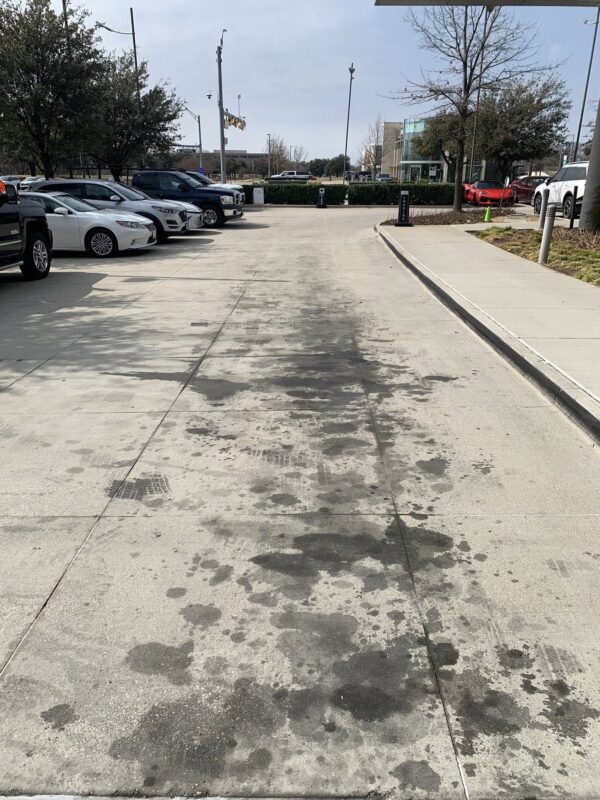
Oil stains on driveways and parking areas are among the most common calls 214 Pressure Washing receives, and they’re also among the most satisfying to resolve. Motor oil, hydraulic fluid, and cooking grease are hydrophobic substances, meaning water alone won’t lift them. They penetrate concrete rapidly and harden over time as they oxidize.
The Degreasing Process
Professionals apply alkaline degreasers, sometimes called hot-water extraction agents, which work by surrounding oil molecules and making them water-soluble. Hot water pressure washing, which uses water heated above 200 degrees Fahrenheit, dramatically increases the effectiveness of this process. Studies in industrial surface cleaning have shown that hot water removes grease up to 60 percent faster than cold water at equivalent pressure, which means less time, less product, and a cleaner result.
Graffiti: More Than Just Paint
Graffiti is a different challenge entirely because the type of paint used, whether it’s aerosol spray paint, latex, or permanent marker, determines which removal method is safest and most effective. Using the wrong solvent on the wrong surface can set the stain permanently or cause irreversible damage to brick, stucco, or wood.
Matching the Method to the Surface
Trained professionals assess both the paint type and the surface material before choosing a treatment. Anti-graffiti solvents work by dissolving the paint’s binding agents without harming the substrate beneath. When combined with controlled pressure washing at the correct PSI for that specific surface, graffiti can be removed completely without leaving a ghost shadow or “holiday,” which is the industry term for a faint outline left behind when removal is incomplete.
Chewing Gum: Small but Surprisingly Stubborn
Gum might seem minor, but hardened gum on sidewalks, parking lots, and commercial entrances is not only unsightly, it’s also a liability. It becomes extremely adhesive as it cures and hardens, bonding tightly to porous surfaces.
Steam and Pressure Together
Hot steam pressure washing is the gold standard for gum removal. The heat softens the gum back to a pliable state while pressure physically lifts it away from the surface. Cold water pressure washing alone rarely works and can actually spread gum residue further into the surface.
Clean Surfaces Reflect a Well-Cared-For Property
Surface stains aren’t just cosmetic issues. They communicate something about how a property is maintained, and in the case of businesses, they directly influence first impressions and customer trust. Professional pressure washing doesn’t just clean what’s visible, it protects the structural integrity of surfaces by removing corrosive substances before they cause lasting damage.
Whether you’re dealing with a rust-stained driveway, an oil-soaked parking lot, unwanted graffiti, or gum-covered sidewalks, 214 Pressure Washing has the equipment, expertise, and commitment to restore your surfaces efficiently and safely. Contact 214 Pressure Washing today to schedule your service and see what a truly clean surface looks like.